A significant 87% of security professionals now identify AI-related vulnerabilities as the fastest-growing threat to digital infrastructure, according to the World Economic Forum’s Global Cybersecurity Outlook 2026. As mobile applications rapidly integrate artificial intelligence for background tasks, the line between helpful utility and data risk has blurred. A secure mobile utility portfolio is a curated selection of outcome-driven applications—such as family location trackers and automated communication logs—audited specifically for local processing capability, data privacy, and network resilience. Building this portfolio requires a structured approach to hardware, software selection, and network transmission.
In my research analyzing digital privacy trends, I have found that users frequently install overlapping utilities without assessing how those tools interact with their device's core operating system. The Security Industry Association (SIA) recently noted in their 2026 Megatrends report that artificial intelligence’s dramatic influence on software is the top factor driving disruption. This shift means consumers can no longer afford a passive approach to their personal software. Below is a step-by-step framework for structuring a secure, highly functional app environment for personal communication and family awareness.
1. Hardware capability dictates your initial privacy baseline.
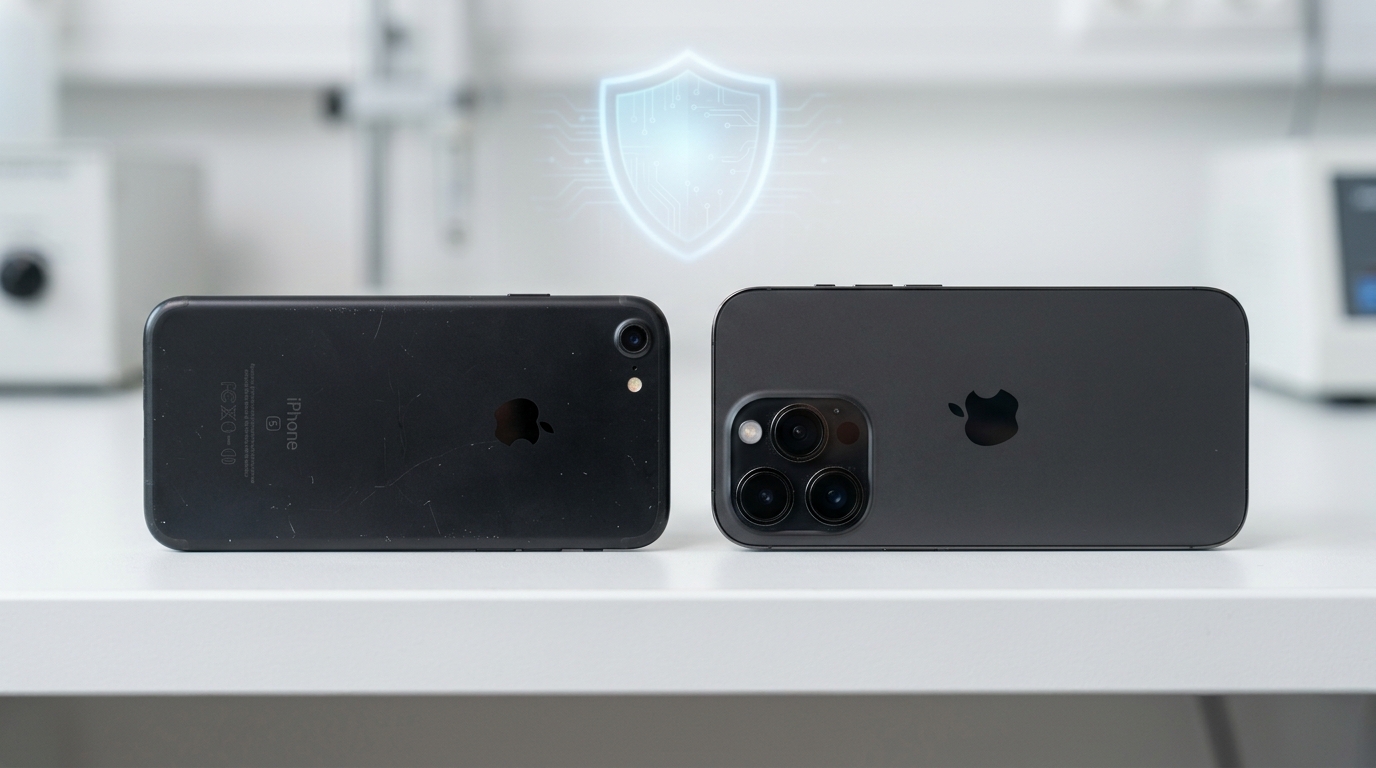
Before evaluating any software, you must assess the physical devices your family operates. The hardware determines whether sensitive data can be processed locally or if it must be transmitted to a third-party server. An older device, such as an iPhone 11, relies on aging processors that often struggle with modern, on-device AI workloads. Consequently, applications installed on older hardware may default to cloud-based processing for tasks like voice transcription or location history analysis, inadvertently exposing your data during transit.
Upgrading your infrastructure immediately reduces this exposure. Moving to a newer architecture, such as the iPhone 14, provides specialized hardware modules explicitly designed for secure enclave processing. The specific model also impacts background utility performance. The increased battery capacity of an iPhone 14 Plus ensures that continuous tracking applications remain active during emergencies without prematurely draining the device. Meanwhile, the advanced neural engine within the iPhone 14 Pro allows complex AI-driven communication tools to transcribe and summarize audio entirely offline.
Practical Tip: Audit the devices in your family circle. If a dependent is carrying hardware older than five generations, prioritize utilities that feature explicit "local-only" processing modes to mitigate the risks associated with cloud offloading.
2. Carrier infrastructure determines transmission security.
Your hardware is only as secure as the network transmitting its data. Many users meticulously configure their application permissions but ignore the underlying mobile network provider. Continuous connectivity is a strict requirement for utilities that track family members or back up important communication records.
When an application attempts to find a family member's location in a congested urban environment, it relies heavily on cellular triangulation when GPS signals are obscured. Operating on a resilient, high-bandwidth network—such as the infrastructure provided by T-Mobile and its advanced 5G standalone architecture—reduces latency and minimizes the time sensitive geographic data spends traversing public nodes. Slower networks force applications to repeatedly ping servers, creating multiple potential interception points and degrading the device’s battery life simultaneously.
It is critical to ensure that your carrier supports modern encryption standards for voice and data. If you are recording a high-stakes professional conversation, the initial audio transmission must be secure before the software even begins processing it.
3. AI integration demands active vulnerability assessment.
The assumption that all software updates improve security is fundamentally flawed in the current security climate. According to Forrester’s Top 10 Application Security Trends for 2026, AI accelerates insecure code creation and multiplies attack surfaces. The rapid deployment of AI features means that previously safe utilities may suddenly introduce new vulnerabilities through poorly implemented machine learning models.
We are seeing a massive shift in corporate governance regarding this issue. The WEF report highlights that the percentage of organizations with processes in place to assess the security of AI tools before deploying them nearly doubled from 37% in 2025 to 64% in 2026. Individual users must adopt a similar mindset for their personal devices. As a technology writer, I strongly advise applying strict selection criteria before installing any new tool.
Decision Framework for AI App Selection:
- Data retention policies: Does the app explicitly state how long AI training data is kept?
- Processing location: Is the machine learning model executed on the device or in the cloud?
- Feature relevance: Does the AI integration actually solve a core problem, or is it merely marketing bloat?
As my colleague Emre Yıldırım detailed in his recent analysis of security shifts, defending mobile utilities against emerging vulnerabilities requires users to proactively audit the specific permissions granted to machine-learning features.
4. Communication capture must prioritize explicit intent.
One of the most complex areas of mobile privacy involves logging and analyzing conversations. Users frequently seek out software to document important meetings, agreements, or family instructions. However, the market is saturated with poorly optimized recorders that hoard unnecessary metadata and compromise participant privacy.
At Frontguard, the focus is on building tools that solve distinct communication problems without introducing secondary risks. A prime example of this methodology is the AI Note Taker - Call Recorder. This application is structured to serve as both an active call recorder and a dedicated voice note taker. The security advantage lies in its intent-driven design: it uses targeted transcription algorithms to convert audio into readable summaries directly, rather than storing massive, unencrypted audio files indefinitely on vulnerable third-party servers.
When selecting a tool for communication capture, prioritize applications that include automated redaction for sensitive information, such as financial details or addresses, during the transcription process. The goal is to retain the actionable context of a conversation while discarding the raw biometric data of the speaker's voice as quickly as possible.
5. Family tracking requires transparent, asynchronous protocols.
The final step in securing your portfolio involves family awareness applications. The Information Systems Audit and Control Association (ISACA) states that the future of cybersecurity is built on trust and intelligent automation. In the context of family tracking, trust means transparency. Covert tracking applications create severe ethical and security liabilities, as their clandestine nature often requires exploiting core system vulnerabilities to remain hidden.
Instead, structure your family's safety around transparent utilities. Applications like Find: Family Location Tracker utilize asynchronous updates. Rather than establishing a persistent, battery-draining connection that broadcasts a user's location continuously, the software pings geographic coordinates at intelligent intervals. This reduces the data footprint and makes it significantly harder for malicious actors to intercept a continuous behavioral pattern.
Similarly, understanding digital presence is just as vital as physical location. Many parents need to ensure their children are maintaining healthy digital boundaries without reading private messages. Tools like When: WA Family Online Tracker provide essential visibility into online activity status for platforms like WhatsApp and Telegram. These apps analyze basic "last seen" network telemetry rather than accessing message contents, strictly maintaining the boundary between necessary parental oversight and invasive surveillance.
6. Routine audits prevent software degradation.
A secure device environment is never static. Applications that were safe six months ago may have been acquired by companies with relaxed data standards, or they may have introduced new AI features that quietly alter their privacy agreements. Every company in the digital space faces pressure to monetize user data, which means your vigilance must be ongoing.
I recommend scheduling a quarterly audit of your family's devices. Review the battery usage statistics to identify applications running background processes unnecessarily. Check the specific location permissions—limit tools to accessing location "Only While Using" unless continuous background tracking is the explicit purpose of the utility. Finally, ensure that your device operating systems are fully patched to support the latest cryptographic defenses.
By intentionally pairing capable hardware with a carefully validated suite of specific, outcome-driven apps, you can manage the complexities of modern digital communication while keeping your family's data firmly under your own control.