
The Escalating Complexity of Mobile Architecture
According to the World Economic Forum's Global Cybersecurity Outlook, 94% of security professionals now anticipate artificial intelligence to be the most significant driver of change in cybersecurity over the coming year. As a technology researcher analyzing user behavior and data analytics, I observe a direct correlation between these enterprise-level macro-trends and the everyday utility applications sitting in your pocket. The mobile application market is no longer just about convenience; it is about verifiable trust.
The long-term direction of mobile utility development centers on replacing passive software with intelligent automation, ensuring that communication and tracking tools process data securely while maintaining strict data privacy protocols. For our company, this means engineering the Frontguard app portfolio to act as proactive safeguards rather than mere data repositories.
The primary industry challenge is a massive inflation of digital vulnerabilities. As AI accelerates the development of new threat vectors, legacy mobile software remains largely reactive. Users are installing applications without understanding the infrastructure supporting them. Our solution—and our roadmap for the coming years—is rooted in building cloud-native architectures that prioritize continuous authentication, ensuring every feature we deploy serves a distinct, secure, and practical purpose.
Why Legacy SaaS Stacks Are Failing Modern Users
The Security Industry Association’s (SIA) 2026 Security Megatrends report revealed that an astonishing 75% of organizational application stacks are now Software-as-a-Service (SaaS). While this statistic reflects enterprise environments, consumer mobile habits mirror this trajectory perfectly. We have shifted completely to cloud-first strategies. Advances in bandwidth and scalable storage have reduced the friction of moving heavy data—like audio files and geographic coordinates—across networks.
However, this transition has created a severe dependency on external servers. Traditional applications pull massive amounts of telemetry from your device, process it remotely, and push it back. When you rely on these outdated architectures for sensitive tasks, you multiply your exposure to data breaches.
At Frontguard, our product decisions directly map to mitigating these exact user vulnerabilities. The core issue is that people need reliable utilities—they need to document conversations and monitor the safety of their dependents—but they are forced to use bloated software that hoards unnecessary data. Our mandate is to reverse this trend. We design apps that minimize the data footprint while maximizing the analytical output.
Assessing AI Security Before Deployment
The awareness surrounding digital vulnerabilities is shifting rapidly. The same WEF report noted that the percentage of organizations with processes in place to assess the security of AI tools before deploying them nearly doubled recently, jumping from 37% in 2025 to 64% in 2026. This is a critical indicator of where the tech sector is heading.
If enterprise leaders are aggressively auditing their AI implementations, everyday consumers must demand the same rigor from the mobile apps they grant access to their microphones and GPS modules. You cannot simply bolt an algorithm onto an existing application and declare it secure.
In my previous post comparing Frontguard’s mobile philosophy to traditional software, I argued that utility apps must solve specific problems without creating new privacy risks. This principle dictates our development pipeline. Before any machine learning model is integrated into a Frontguard product, it undergoes rigorous testing to ensure it cannot be weaponized to extract unintended telemetry. These internal auditing processes include strictly limiting how algorithms interact with core operating system functions.
Intelligent Automation vs. Passive Monitoring
The next major leap in mobile utility is intelligent automation. The SIA report highlights a bold industry prediction: within a few short years, AI will largely replace human labor for monitoring tasks, automating everything from data analysis to dispatch alerts. In the context of family safety and personal organization, this means software must evolve from a passive dashboard you check manually into an active assistant that informs you only when necessary.
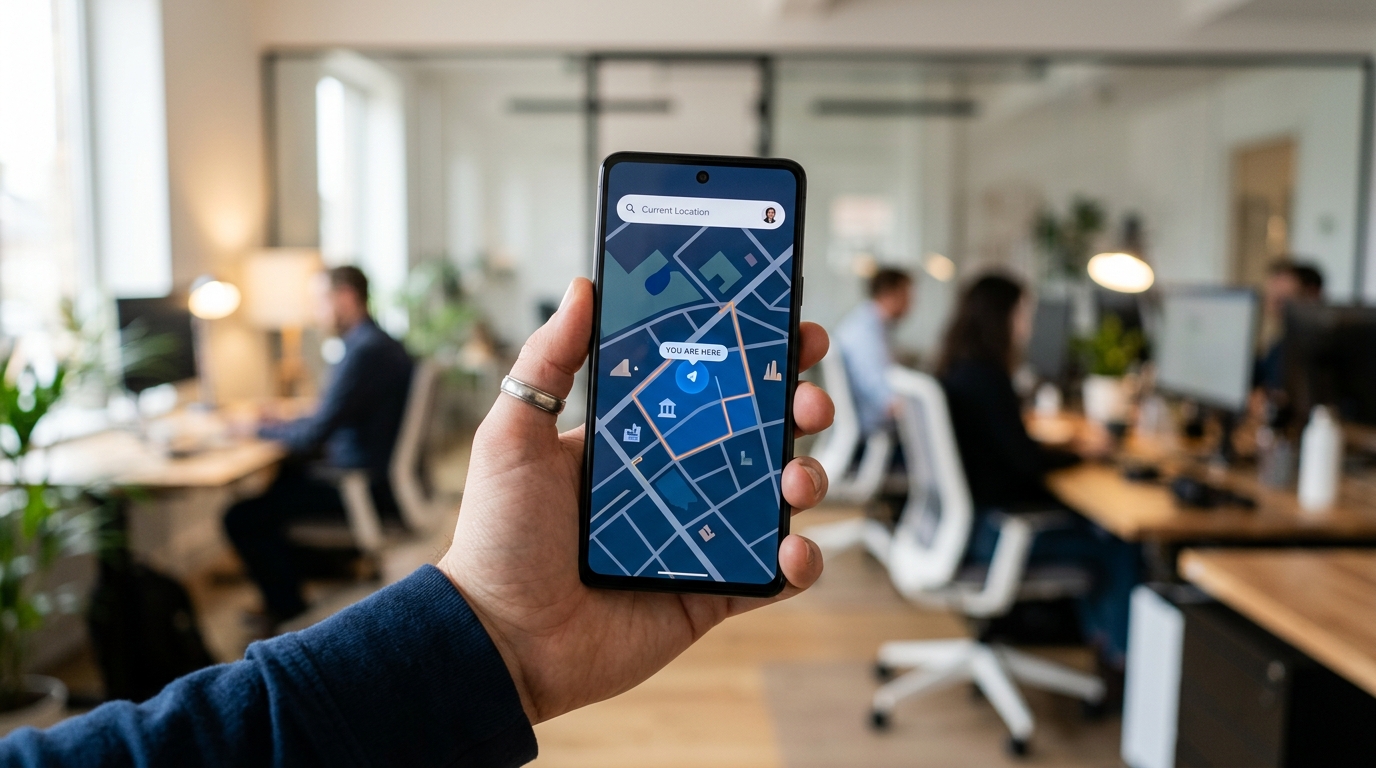
Consider the daily reality of family logistics. Constantly refreshing a map to ensure a family member reached their destination is an inefficient use of cognitive energy. By integrating intelligent automation, tools like Find: Family Location Tracker can process spatial data in real-time, learning standard routines and adjusting protections automatically. Similarly, for families monitoring digital safety, tools like When: WA Family Online Tracker provide the behavioral analytics needed to understand usage patterns without constant manual oversight.
This approach directly aligns with the 2026 ISACA findings, which indicate that the future of the field will be built on trust, automation, and heightened public scrutiny around data privacy. Users do not want to become full-time dispatchers for their households. They want reliable systems that respect their privacy while offering peace of mind.

Mapping Product Capabilities to Real-World Hardware
Developing resilient software requires accounting for severe hardware fragmentation. A user's choice of device and carrier should never compromise their personal security or the reliability of their tools.
Whether a family is coordinating logistics using a standard iPhone 14, an iPhone 14 Pro, or older legacy hardware like the iPhone 11, the underlying software must perform consistently. Furthermore, the application must maintain persistent, secure connections across varying network conditions, operating reliably whether on a localized Wi-Fi network or a major cellular provider like T-Mobile. We optimize our codebase to ensure that even users operating the larger iPhone 14 Plus experience minimal latency when receiving critical location updates or processing audio files.
This hardware-agnostic reliability is central to our roadmap. We do not build software that only functions under ideal laboratory conditions; we engineer applications designed for the unpredictable nature of daily mobile usage.
Re-engineering Communication Capture
The demand for communication capture has shifted from simple audio recording to comprehensive information synthesis. Professionals and individuals need accurate records of their verbal agreements, client instructions, and critical appointments.
Our response to this need is the AI Note Taker - Call Recorder. The development of this tool was driven by a clear user requirement: people do not just want an audio file sitting in their storage; they want the actionable data trapped inside that audio file.
By feeding real-time audio data into localized transcription models, the app functions simultaneously as a call recorder and a dedicated note taker. It structures the conversation, extracts key action items, and generates readable summaries. Because we adhere to the strict security mandates discussed earlier, this processing prioritizes on-device computation wherever possible, drastically reducing the risk of sensitive conversations being intercepted during cloud transmission.
A Forward-Looking Infrastructure Roadmap
As my colleague Emre Yıldırım detailed in his 2026 mobile infrastructure roadmap, defending applications against emerging vulnerabilities is a continuous operational requirement. Our long-term vision is not about releasing a higher volume of apps; it is about deepening the capabilities of the ones we have.
- Continuous Authentication: Moving away from single-point login systems to cloud-native architectures that continuously verify user access.
- Behavioral Trend Analysis: Utilizing global telemetry to predict which software flaws could be weaponized, allowing our engineering teams to deploy mitigations before exploits affect our user base.
- Targeted Utility: Ensuring every feature strictly adheres to our outcome-driven philosophy. If a feature does not directly solve a user problem or improve family awareness, it is excluded from the build.
The next iteration of mobile technology will not be defined by which company can collect the most data, but by which organization can secure and synthesize that data most effectively. Frontguard is committed to leading this transition, delivering practical, heavily audited, and highly functional mobile utilities for everyday life.