
Picture this scenario: It is 3:00 PM on a Tuesday. You are finalizing a critical client conversation on your iPhone 14 Pro when your child’s school suddenly calls on the other line. You switch over, get the update that after-school practice is canceled, and now you need to locate your teenager who just left the campus with their older hand-me-down iPhone 11. Your family relies on a shared T-Mobile data plan, so connectivity isn't the issue—but having the right tools accessible in those stressful five minutes is. You need to instantly verify a location, record the remaining details of your interrupted client meeting, and coordinate a quick pickup schedule. In high-pressure moments like this, no one wants to struggle with a complex software ecosystem. They just want tools that work instantly.
I spend my days researching data analytics, user behavior, and family technology. From my perspective, the core issue with the modern mobile market is not a lack of technology, but a crisis of utility. We are overwhelmed by software that demands constant attention rather than operating quietly in the background to solve specific problems. This realization is what drives Frontguard as a mobile company.
As my colleague Emre Yıldırım detailed in his analysis of what people actually need from family safety apps, users are suffering from app fatigue. They do not want more features; they want clearer criteria for selecting the right utility. To understand why we build software the way we do, it helps to compare the traditional industry approach with our targeted utility methodology.
Why Does the Software Industry Keep Building Things We Don't Need?
To grasp the current state of consumer software, we have to look at the data driving development. The Sogolytics Experience Index (EX) 2024 report recently highlighted a growing tension between digital efficiency and human connection. While companies are rushing to digitize every interaction, users are actively pushing back against intrusive platforms that complicate their daily routines.
Furthermore, the artificial intelligence shift is forcing a reckoning. According to the World Economic Forum’s Global Cybersecurity Outlook 2024, 94% of surveyed leaders anticipate AI being the most significant driver of change. The Security Industry Association’s (SIA) 2024 Megatrends report echoes this with a clear warning: AI is forcing a mass extinction event for traditional, inefficient software.
What does that mean for everyday users? It means that heavy, complex applications loaded with menus and manual inputs are becoming obsolete. Opportunities exist for AI-driven automation in reporting, communications, and analysis, but only if applied correctly. We are seeing a split in how developers respond to this shift.
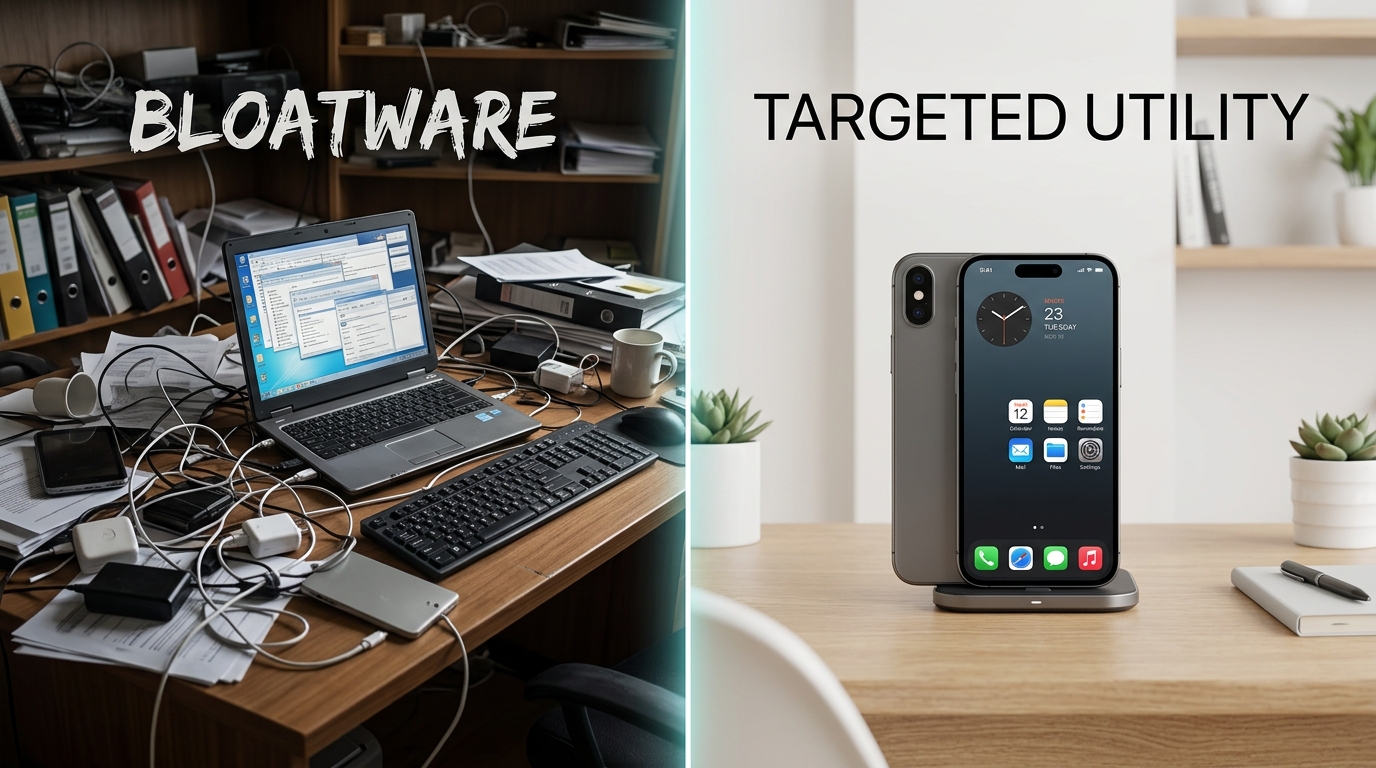
The Traditional "Super App" Ecosystem vs. The Targeted Utility Model
When you evaluate the applications currently sitting on your device—perhaps you recently upgraded to an iPhone 14 Plus for the larger screen to manage your schedules—you will likely notice two distinct design philosophies. Comparing these approaches side by side reveals exactly why certain apps frustrate users while others become indispensable.
Approach A: The Broad Ecosystem (The Traditional Model)
Historically, app developers aim to build "platforms." They want you to spend maximum time inside their software.
Pros: You ostensibly get an all-in-one hub. The marketing promises that you can chat, track, record, and manage documents in a single place.
Cons: In practice, this creates immense software bloat. These platforms require excessive device permissions to operate their myriad features, draining battery life and increasing security vulnerabilities. The WEF 2024 Outlook notes that the percentage of organizations implementing strict processes to assess AI security has nearly doubled (from 37% in 2023 to 64% in 2024), largely because broad ecosystem apps expose too many attack vectors. For the user, toggling through five sub-menus to find a basic family location tracker during an emergency is unacceptable.
Approach B: The Targeted Utility (The Frontguard Philosophy)
Instead of building platforms that demand attention, the alternative is building point solutions—specialized tools designed to execute a single task flawlessly and then get out of your way.
Pros: Applications remain lightweight and intuitive. Permissions are strictly limited to the necessary functions (e.g., a voice memo tool only needs microphone access, not your contacts). Because the scope is narrow, integrating AI for specific enhancements—like automated audio transcription—can be done securely without opening the entire phone up to vulnerabilities.
Cons: Users must selectively curate their app portfolio rather than relying on a single, messy hub. It requires downloading a distinct app for call management and another for family location tracking.
We actively chose the Targeted Utility Model. Our goal is not to monopolize your screen time. Our mission is to provide distinct, highly secure tools that solve an immediate need.
How Do We Apply Secure Automation?
Let's look at how this comparative philosophy applies to the integration of modern capabilities like artificial intelligence. The SIA Megatrends report explicitly points out opportunities for automation, but how you build that into consumer products dictates whether the product is a security risk or a time-saver.
In the traditional model, AI is often deployed as a conversational chatbot forced into every corner of the app, reading all your data to provide "context." It is a massive privacy risk, which is exactly why cybersecurity leaders are sounding alarms.
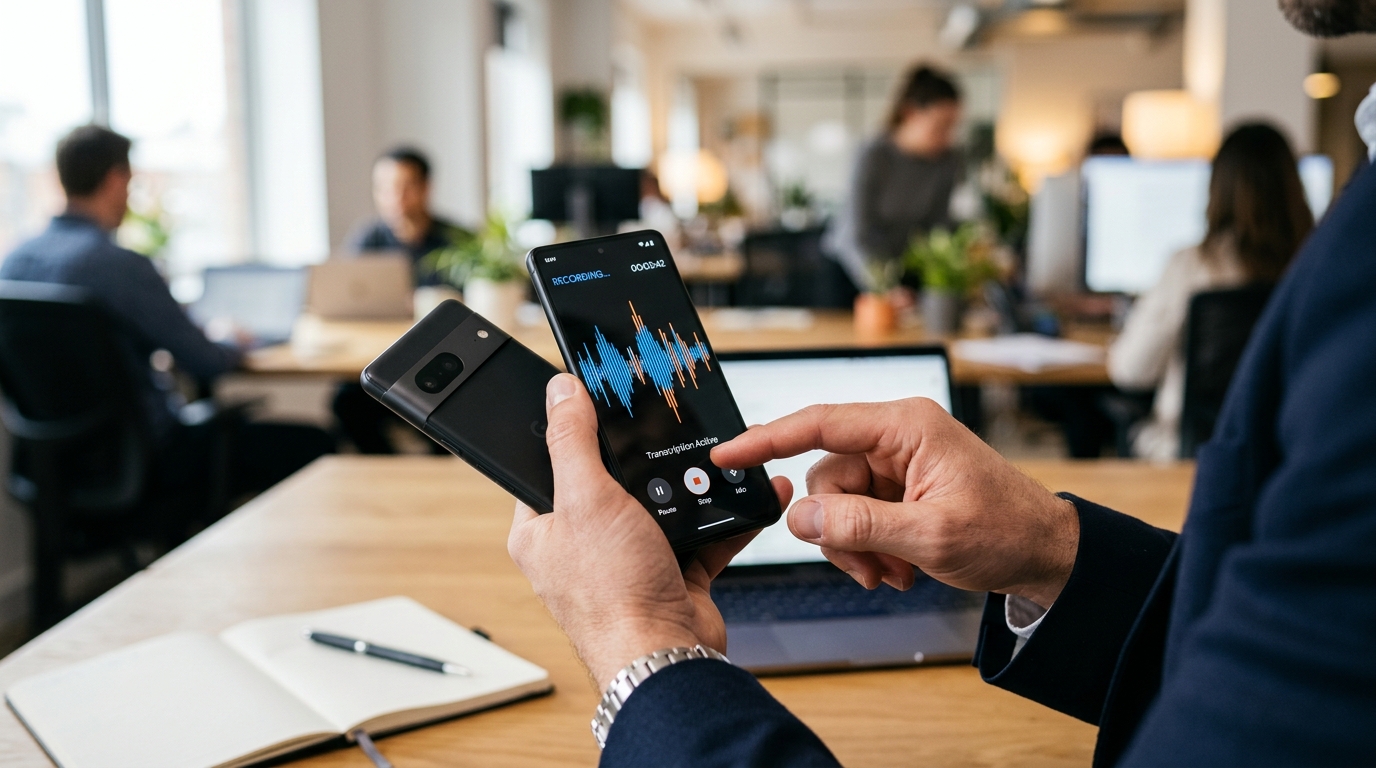
In our model, we use technology specifically to reduce manual labor. Consider our approach to audio capture. Professionals and parents alike spend hours trying to recall details from verbal conversations. By offering an AI Note Taker - Call Recorder, we provide a utility that safely captures voice interactions and automates the transcription process. It acts as both a standard voice recorder and a smart note taker. You make your call, the tool generates a localized summary, and you move on with your day. The automation is confined to the audio file itself, preserving your broader device security.
Evaluate Your Daily Safety and Awareness Needs
Another area where the traditional-versus-targeted comparison becomes highly visible is family safety. If you search the app store for parental controls, you will find massive spyware suites designed to mirror a child's device, restrict their browser, and intercept their messages.
As a researcher focused on family technology, I have observed that these heavy-handed approaches often destroy trust and cause devices to run poorly. Families rarely need military-grade surveillance; they need situational awareness. They just want to know that their family members are safe, and that their digital habits are healthy.
We break this down into specific, consent-based utilities:
1. Physical Location Verification:
When you need to ensure your teenager made it to their friend's house safely, you do not need an app that also reads their emails. You just need a reliable GPS ping. Our Find: Family Location Tracker is built entirely around this single premise. It is a dedicated family and contact location tool optimized to work efficiently across different devices and network conditions, providing peace of mind without overreaching.
2. Digital Habit Awareness:
Understanding when your family is active online can help establish healthier bedtime routines or identify problematic internet use late at night. Instead of invasive message interception, we provide tools that analyze public status metadata. Applications like When: WA Family Online Tracker allow parents to monitor "last seen" and online status trends on platforms like WhatsApp and Telegram. It gives you the behavioral data you need to have a conversation with your child, without violating the privacy of their actual message contents.
Adopt a Utility-First Mindset
Whether you are setting up a brand new iPhone 14, managing a small business from your mobile device, or just trying to keep your family organized, the applications you choose dictate your daily friction.
Current industry data makes one thing clear: bloated, inefficient software is reaching its end. As AI continues to shift the industry's direction, the companies that succeed will be the ones that respect user time and device security. When selecting tools to include in your daily routine, prioritize applications that do one thing exceptionally well. Look for clear privacy policies, limited permission requests, and a transparent explanation of how your data is processed.
Our commitment at Frontguard is to remain firmly on the side of utility. We will continue researching the real problems people face—whether that involves securely recording a crucial phone conversation, finding a lost device, or keeping a family connected—and we will build the exact, targeted tools required to solve them.