
Much of the software installed on smartphones today is becoming increasingly outdated. The mobile app environment is decisively shifting from passive data collection to AI-driven, active utility. To build an effective mobile strategy for communication and family safety, users must prioritize apps that automate insights, ensure continuous security, and foster genuine human connection over mere data tracking. In my experience analyzing mobile growth and user retention, I consistently see users struggling with app bloat simply because they are holding onto legacy tools that no longer serve their practical needs.
Passive observation is no longer sufficient
For years, the standard approach to utility software involved reactive monitoring. You would open a map to check a location, or manually sift through an hour of audio to find a single conversation detail. The expectation was that the user had to do the heavy lifting, while the software simply provided the raw data. This model is rapidly evolving. Recent industry reports on security megatrends highlight a critical shift: AI-driven automation is expected to largely replace traditional manual monitoring within the coming years. The trajectory is clear across the industry, moving from passive detection to active deterrence and intelligent workflows.
When we look at the apps people rely on daily, this transition from passive to active is exactly what separates essential utilities from disposable downloads. You do not need a tool that just records sound; you need a system that captures context. You do not need an application that merely drops a pin on a map; you need an intelligent framework that helps you understand routine movements without requiring constant surveillance. This is the foundational philosophy we operate on at Frontguard. As a company, we recognize that our users are often overwhelmed by raw data and require actionable clarity.

AI vulnerabilities require a new approach to utility software
As applications become more intelligent, the infrastructure supporting them must become significantly more secure. You cannot deploy automated data analysis without first ensuring that the underlying architecture is protected. The World Economic Forum's recent Global Cybersecurity Outlook provides sobering context here, noting that organizations are significantly increasing their assessment of AI tools before deployment. This data underscores a reality I discuss frequently with mobile developers: intelligence without security is a liability.
Internal security analysis at Frontguard emphasizes that whether you are recording a sensitive business meeting or checking if your teenager made it home safely, the data must be treated with the highest cryptographic standards. When selecting software, your primary criterion should be whether the developer explicitly addresses how their automated systems protect your privacy. If a vendor cannot articulate their security protocols, their application does not belong on your device.
Hardware upgrades demand smarter software infrastructure
There is a common misconception that upgrading your physical device automatically resolves your software pain points. Whether you are outfitting your family with brand new devices through a carrier, upgrading to a high-end iPhone 14 Pro, or maintaining a reliable iPhone 11, the hardware is ultimately a vessel. The glass and silicon can only execute what the software allows.
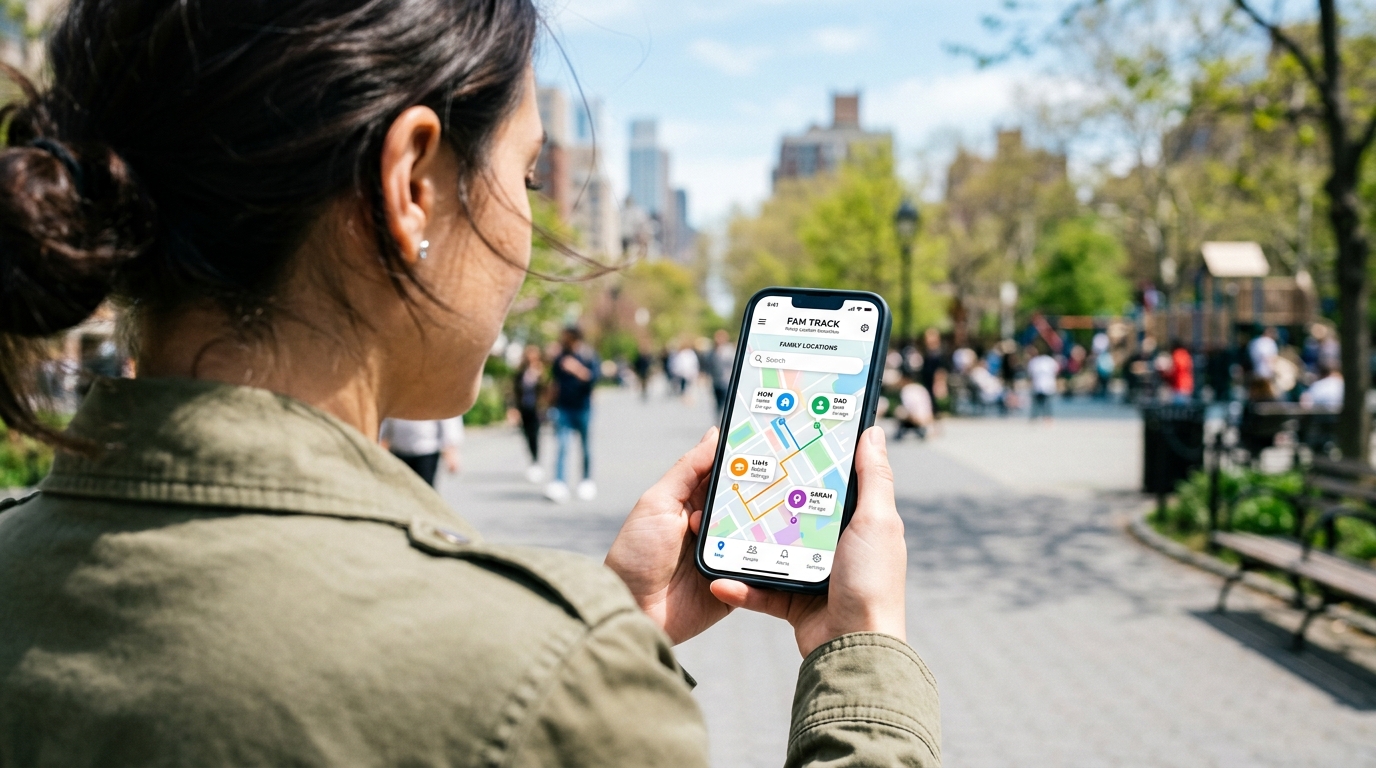
If you purchase a state-of-the-art device but load it with passive, outdated software, you are bottlenecking your own experience. For example, modern family safety requires tools that utilize advanced GPS and network triangulation without draining the battery of older models. This is precisely why we engineered Find: Family Location Tracker to function as an active utility rather than a passive map. It makes use of the inherent capabilities of whatever device it is installed on, providing reliable location awareness without demanding constant user input. The software must rise to meet the hardware, optimizing background processes to deliver security without sacrificing device performance.
Security requires continuous authentication and real-time AI
The concept of logging in once and assuming a secure session is becoming a relic of the past. Modern cybersecurity trends point toward a future dominated by cloud-native architectures built with continuous authentication and monitoring in mind. It involves feeding real-time data into systems that can learn, adjust, and improve protections automatically. This is not just enterprise-level thinking; it applies directly to the personal utility applications we use every single day.
Consider the professional requirement of maintaining accurate communication records. A modern AI Note Taker - Call Recorder must do more than capture audio. It must securely process the transcription and ensure that the summarized data is protected throughout its lifecycle. When you capture a call, the intelligent system should automatically identify action items and organize the information, all while operating under a strict, real-time security umbrella. This level of active utility is what transforms a simple audio file into a secure, searchable asset for your business or personal life.
The human connection remains the ultimate goal
It is crucial to remember why we build and install these tools in the first place. The objective of automation is never to replace human interaction, but rather to remove the friction that prevents it. Recent sentiment reports highlight a growing tension between digital efficiency and human connection. We see this exact same tension in the consumer mobile space. People do not want apps that make them feel like security guards; they want tools that give them peace of mind so they can focus on their actual relationships.
When evaluating tools for family awareness, the selection criteria should heavily weigh how the app impacts family dynamics. Take our application When: WA Family Online Tracker as a practical example. The purpose of understanding a family member's online habits is not strict surveillance. Instead, it is about gaining visibility into digital routines so you can initiate conversations at the right time. True utility software provides the insight; you provide the empathy.
Your app portfolio must shift toward active utility
Building a resilient mobile ecosystem for yourself and your family requires a thorough audit of your current applications. I recommend categorizing your existing apps into two buckets: those that wait for you to act, and those that actively work to provide you with secure, actionable insights. If an application falls into the former category and deals with critical areas like communication capture or family safety, it is time to replace it.
The industry is moving toward a standard where AI-driven analysis, continuous security assessment, and intuitive human-centric design are the baseline expectations. Your mobile device is a powerful tool, but it requires an active, intelligent software layer to realize its full potential. By prioritizing applications that include automated transcription, real-time security adjustments, and meaningful family awareness features, you transform your phone from a passive terminal into an active partner in your daily life.