
What Did A Field Audio Test Teach Me About Mobile Utility?
A few years ago, while refining an early audio processing algorithm, I spent a frustrating afternoon conducting field tests in a noisy urban transit hub. My setup was deliberately varied: I had a newer iPhone 14 Pro in one hand and an older iPhone 11 in the other, both connected to the T-Mobile network to test latency and cloud sync reliability. The goal was to see how quickly our software could isolate voice frequencies against the chaotic background noise of trains and crowds.
The technical results were insightful, but the real takeaway came from observing my own interaction with the devices. I found myself repeatedly ignoring a dozen feature-heavy, bloated applications on my home screen, reaching only for the single, lightweight utility that performed one specific task flawlessly. That afternoon crystallized my product philosophy. At its core, Frontguard is a mobile application company that shifts the focus from software bloat to targeted, outcome-driven utility. We engineer secure, AI-driven tools specifically for everyday communication capture and family awareness, prioritizing practical problem-solving over endless feature lists.
Despite user fatigue with complicated interfaces, the broader technology industry remains entangled in several persistent misconceptions about what consumer software should be. To understand what drives our product roadmap, it helps to examine and debunk the four most common myths dominating mobile application development today.
Why Do We Still Believe More Software Equals Better Solutions?

There is a prevailing myth that a successful technology company must build massive ecosystems that trap users inside a walled garden. The assumption is that apps must include dozens of peripheral features to justify their presence on a user's device. In my experience, this approach actively degrades the user experience by prioritizing transaction volume over actual problem-solving.
The enterprise security sector is already recognizing this fallacy, and consumer software is rapidly following suit. According to the 2026 Security Megatrends report published by the Security Industry Association (SIA), there is a fundamental shift occurring where "The Value Chain Replaces the Channel Model." The SIA report challenges developers to reassess how systems are delivered, advocating for a clear focus on end-user operational outcomes rather than models that reward mere transactions. Furthermore, the report notes that as organizations push toward SaaS environments, the reduction of friction is paramount.
When we design utilities at Frontguard, we build for friction reduction. If a user needs to record an important conversation, they do not need an app bundled with social networking tools or convoluted file managers. They need a highly optimized tool that does one thing perfectly. This is why our portfolio focuses strictly on core utility. We strip away the unnecessary, ensuring that the primary function—whether it is location awareness or audio capture—operates with maximum efficiency.
Is Artificial Intelligence Just A Gimmick For Consumer Applications?
A second major misconception is that integrating artificial intelligence into everyday mobile utilities is merely a marketing tactic rather than a functional necessity. Many developers still treat AI as an add-on layer, rather than a foundational architecture. This underestimation is risky, especially as the digital environment changes.
The World Economic Forum's Global Cybersecurity Outlook 2026, produced in collaboration with Accenture, states that AI is accelerating the pace of digital shifts. A staggering 94% of their survey respondents anticipate AI to be the most significant driver of change in the coming year. More importantly, the percentage of organizations proactively assessing the security of their AI tools has nearly doubled, jumping from 37% in 2025 to 64% in 2026.
This data heavily influences our engineering choices. We do not use machine learning simply to generate summaries; we use it to secure and process data locally where possible. For instance, when designing our AI Note Taker - Call Recorder, the priority was to ensure that the transcription and summarization algorithms respected strict data boundaries. A modern voice recorder and note taker must use AI to enhance clarity and provide actionable text, but it must do so without exposing the user's private conversations to unvetted third-party processing. True AI utility is, at its heart, indistinguishable from security.
Must Family Safety Tools Always Compromise Personal Privacy?
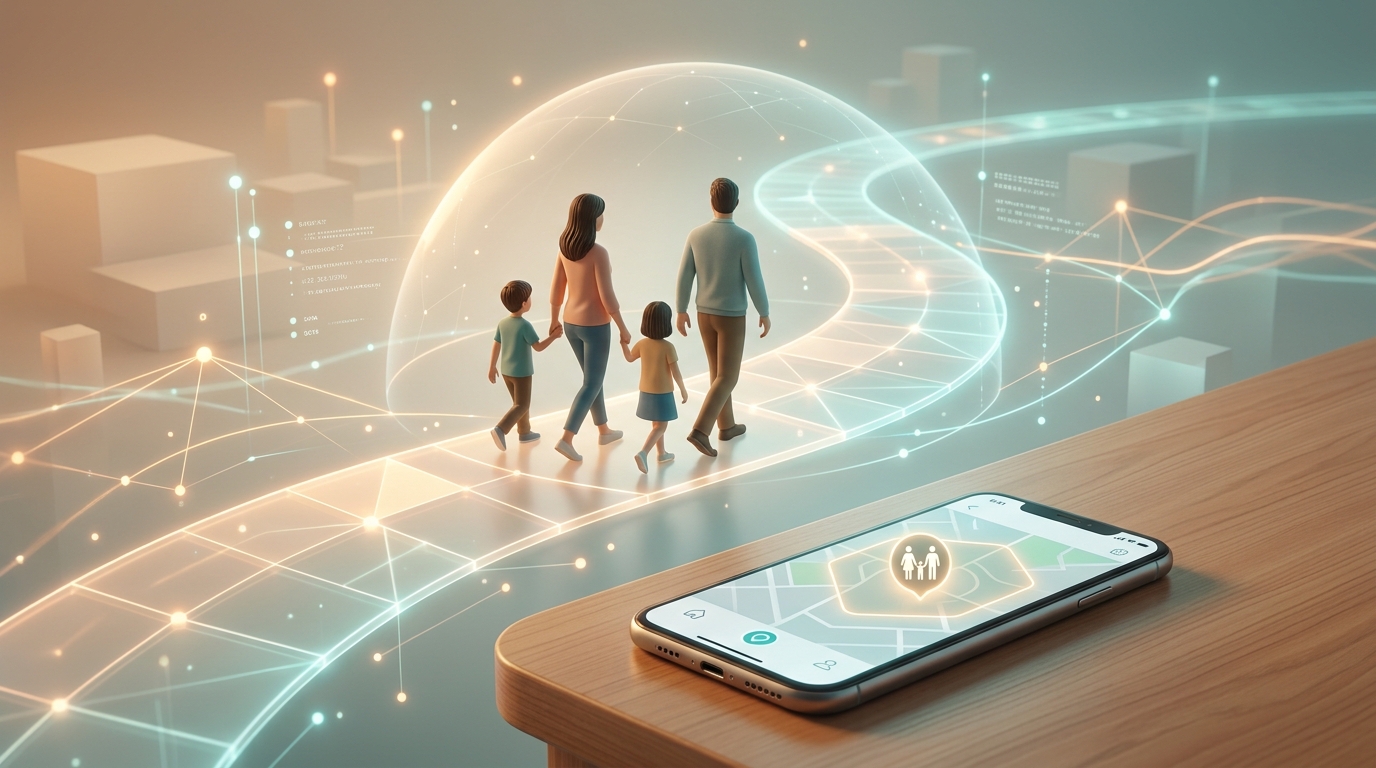
Perhaps the most sensitive myth in our industry revolves around tracking applications. The common belief is that family location and online activity monitors are inherently invasive, forcing parents to choose between the safety of their dependents and the privacy of their household data.
The reality is that poor architecture, not the concept of tracking itself, causes privacy breaches. As outlined in the ISACA 2026 trend report, the future of digital security is built on trust, intelligent automation, and heightened public scrutiny around data privacy. ISACA notes a significant rise in architectures built with continuous authentication and monitoring in mind, ensuring that data access is rigorously controlled.
We apply these exact principles to consumer safety tools. When a parent uses Find: Family Location Tracker to verify that a child has arrived at school safely, the location telemetry must be encrypted in transit and accessible only to authorized family members. Similarly, our visibility tools like When: WA Family Online Tracker are designed strictly for household awareness, operating within transparent, user-defined permission boundaries.
We build these utilities because there is a genuine, practical need to find loved ones during emergencies or coordinate busy household schedules. Deploying family utilities safely requires abandoning passive data collection in favor of secure, active utility models.
Do You Need The Latest Hardware For Secure Communication?
The final myth I frequently encounter is the idea that high-grade security and AI processing require the absolute latest smartphone hardware. Consumers are often led to believe that unless they upgrade to an iPhone 14 or an even larger iPhone 14 Plus, they cannot benefit from modern intelligent applications.
While advances in device hardware certainly create new capabilities—the SIA Megatrends report rightly points out that standards and unified data models are realizing hardware's full potential—well-engineered software should degrade gracefully on older systems. An application's core functionality should not break simply because the processor is two generations old.
During our development cycles, we mandate testing across a wide spectrum of devices. A call recording utility or a GPS locator must function reliably during an emergency, regardless of whether the user is operating a flagship device or a heavily used older model. By optimizing our codebases to reduce processing overhead, we ensure that our apps remain accessible and reliable for the broadest possible audience.
Who Actually Benefits From Outcome-Driven Application Design?
Understanding who we build for dictates how we build. Frontguard's portfolio is specifically designed for individuals who require definitive answers to daily logistical and communication challenges without managing complex software.
- Working Professionals: Individuals who need exact records of verbal agreements, client calls, or meeting minutes. They require tools that process audio into actionable text securely and instantly.
- Parents and Caregivers: Families navigating busy schedules who need immediate, reliable confirmation of a dependent's location or online status without intrusive setup processes.
- Privacy-Conscious Consumers: Users who understand that "free" software often commoditizes their data, and who prefer straightforward utility applications with transparent operational models.
By actively rejecting the myths of software bloat, superficial AI, and mandatory hardware upgrades, we maintain a clear focus on what actually matters. Technology should not demand your attention; it should quietly handle the task you assigned it and get out of the way. That is the standard we apply to every application we develop, ensuring that our mobile solutions deliver genuine, secure utility exactly when you need them.