
How do we distinguish between mobile utilities that actually protect our communications and families, versus those that merely create a false sense of security while harvesting our data?
The answer is that a secure personal mobile strategy requires deliberately selecting single-purpose tools—like dedicated location trackers or encrypted communication recorders—that prioritize data integrity over generalized, bloated feature sets. In my work analyzing user behavior and data analytics within family technology, I constantly encounter users who believe they are securing their digital lives, only to discover they have simply expanded their attack surface.
We are currently operating in a fast-moving technical field. The World Economic Forum’s Global Cybersecurity Outlook reports that a vast majority of surveyed experts anticipate artificial intelligence will be the most significant driver of change in security this year. As individuals and organizations scramble to adapt, several pervasive misconceptions have clouded how we choose and deploy everyday software. By examining the data, we can separate the myths from the structural realities of mobile security, communication capture, and family awareness.
1. Volume Does Not Equal Awareness
There is a persistent misconception that installing a vast array of monitoring and safety software naturally results in better oversight. Users often stockpile applications, assuming that overlapping functionalities will catch whatever falls through the cracks.
In reality, the opposite is true. Software bloat reduces visibility and increases systemic vulnerability. The Security Industry Association (SIA) Megatrends report highlights that a significant portion of a typical organization's application stack is now comprised of SaaS products, pointing to a clear trajectory of software sprawl that mirrors consumer behavior. When a user installs five different communication tools, three location monitors, and multiple productivity suites, the resulting notification fatigue causes them to ignore the alerts that actually matter.
As Emre Yıldırım detailed in his comprehensive analysis on what people actually need from family safety apps, the objective is not to acquire more software, but to establish clearer criteria for selection. A highly effective mobile portfolio should only include utilities that serve an isolated, strictly defined purpose. If your goal is to maintain communication records, an isolated tool performs better than a sprawling social suite that demands access to your entire contact book and photo gallery.
2. AI Integration and Communication Privacy
A second major myth is the assumption that any AI-driven tool is inherently a privacy risk, particularly when dealing with sensitive voice data or personal notes. Because AI requires data to function, many consumers fear that adopting AI for daily communication utilities guarantees their private conversations will be used to train public language models.
Recent cybersecurity outlooks provide necessary context here. While AI vulnerabilities are a focus for security experts, this has forced a massive maturation in how software is deployed. The percentage of entities implementing strict processes to assess the security of AI tools before deployment has increased significantly in the last two years.
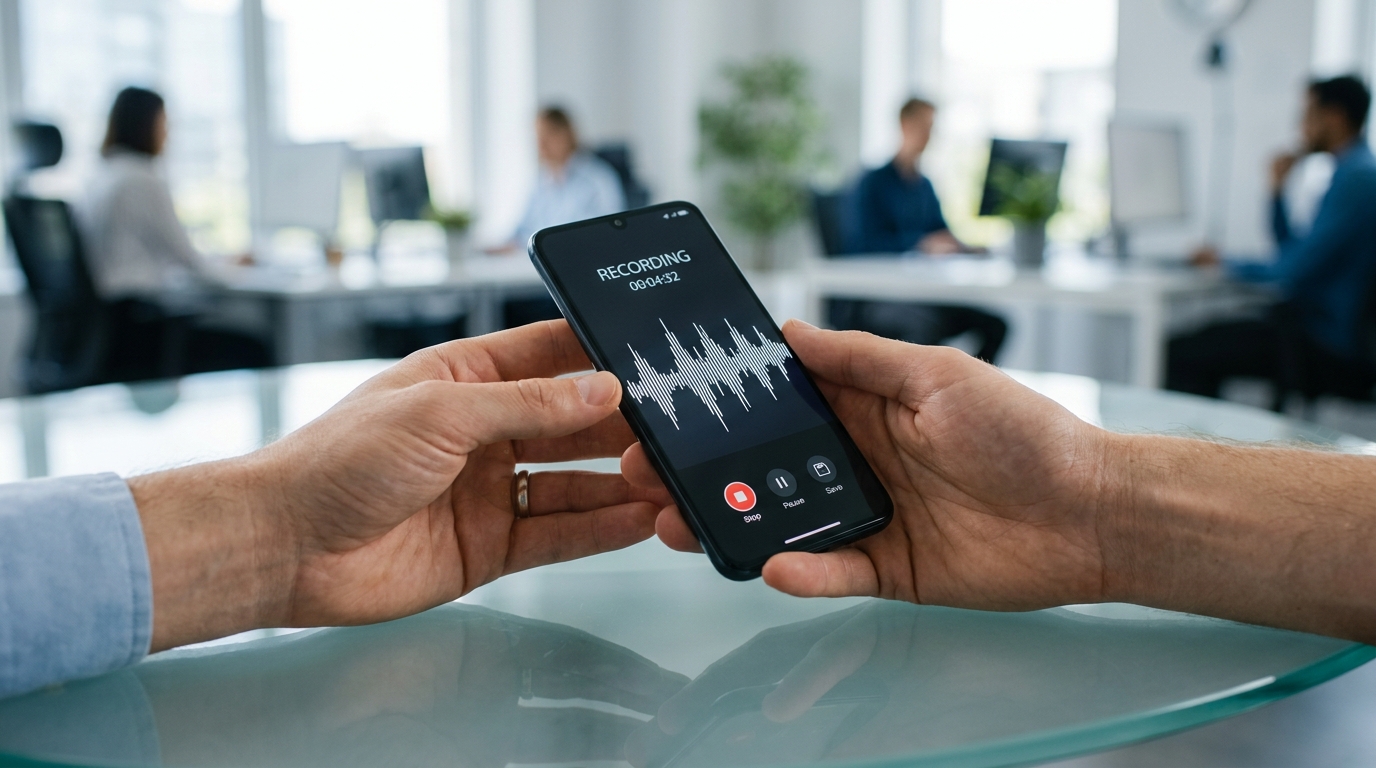
When properly architected, AI strengthens data utility without compromising privacy. In my research into behavioral analytics, I have observed that manual note-taking during critical phone calls often results in lost context, misquotes, and poor record-keeping. Utilizing a secure AI Note Taker - Call Recorder shifts the cognitive load away from the user. By processing audio transcripts locally or via encrypted, zero-retention cloud environments, you can capture exact communication records accurately. The capability to record, transcribe, and summarize a call—when built by a mobile company that prioritizes data isolation—provides a verifiable system of record that protects you during disputes or complex family coordination.
3. Digital Tracking and Human Connection
There is a widespread psychological barrier regarding family tracking and location sharing. The myth insists that deploying location monitors or online status trackers signifies a lack of trust, inevitably deteriorating the human relationships they are meant to protect.
Recent research suggests a more nuanced reality. The latest industry experience indexes highlight a growing tension between digital efficiency and human connection. However, transparently implemented digital efficiency actually removes the friction from human interaction.
Consider the daily anxiety of coordinating family logistics. Repeatedly texting a spouse or child to ask "Where are you?" or "Have you left yet?" generates unnecessary stress. When families mutually agree to utilize a Find: Family Location Tracker, they eliminate the need for these high-anxiety check-ins. You do not have to disrupt someone's day to know they arrived safely at their destination.
The same principle applies to digital availability. Disagreements frequently arise when messages are unreturned, leading to assumptions about being ignored. Utilizing tools like When: WA Family Online Tracker provides objective visibility into online availability across platforms like WhatsApp. If you can see that a family member has simply not been online due to poor connectivity or a busy schedule, you prevent a communication breakdown before it starts. The technology absorbs the logistical friction, leaving more room for meaningful connection.

4. Hardware Limits and Modern Security
The final myth involves the hardware itself. Consumers are frequently led to believe that in order to run sophisticated tracking, recording, and AI tools, they must continually upgrade to the latest flagship devices. The assumption is that modern encryption and background location processing will cripple older phones.
This is a fundamental misunderstanding of how optimized mobile architecture works. While the global physical security and services market is massive, personal software security does not require enterprise-grade hardware.
A well-engineered background utility is designed to operate with minimal resource consumption. Whether you are running these applications on a standard iPhone 14, an older generation iPhone 11, or an iPhone 14 Plus, the core functionalities remain identical. Features like GPS polling, audio capture, and encrypted data transmission rely far more on the efficiency of the software code and the stability of carrier networks—such as T-Mobile or regional equivalents—than on possessing the latest processor.
As Burak Aydın noted in his recent guide on structuring a personal app portfolio, prioritizing practical tools means choosing software that works consistently across the diverse hardware your family already owns. If a location tracker only works efficiently on an iPhone 14 Pro but drains the battery of your child’s older device within hours, it is a poorly designed application, not a hardware failure.
At Frontguard, our approach centers on this exact philosophy. The apps we develop are designed to solve everyday communication and awareness problems without requiring users to replace their hardware or compromise their data.
Ultimately, securing your digital communications and maintaining situational awareness for your family requires a rejection of these common myths. Stop downloading redundant applications. Demand transparency from the AI tools you deploy for call recording and note taking. Frame location and online tracking as tools for reducing logistical anxiety. By making these deliberate shifts in perspective, you can build a personal mobile infrastructure that is both resilient and genuinely useful.