Frontguard: A Mobile Company Focused on Practical Apps for Everyday Communication and Family Awareness
Frontguard is a mobile company built around a simple idea: useful technology should solve specific, everyday problems without adding unnecessary complexity. Rather than trying to build one product that does everything, Frontguard develops focused apps that help people manage conversations, keep better records, and stay informed about family-related activity in ways that feel practical and clear.
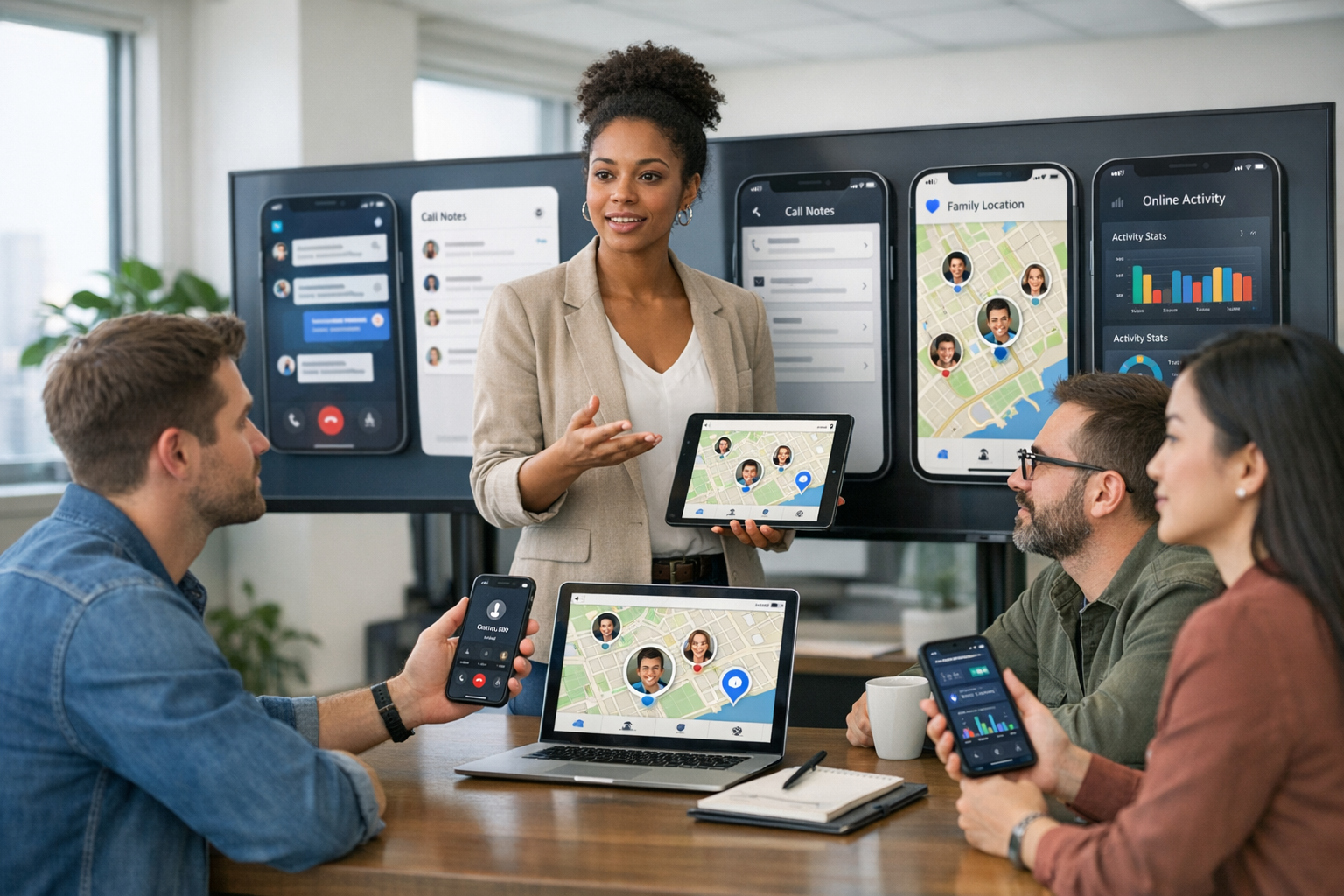
The company’s app portfolio includes AI Note Taker - Call Recorder, Find: Family Location Tracker, and When: WA Family Online Tracker. Each product addresses a different but connected need: remembering what was said during an important call, knowing where loved ones are when coordination matters, and understanding patterns of online activity when families want more visibility.
This introduction explains what frontguard stands for, how the company thinks about product design, and why its work centers on highly specific user problems instead of broad feature lists.
A company built around real-life utility
Many software products are created by starting with a technology trend and then looking for a use case. Frontguard takes the opposite route. The starting point is the user problem. What causes friction in day-to-day life? What information do people often miss, forget, or struggle to organize? Which situations create uncertainty for families? Those are the questions that shape product decisions.
That approach matters because most people do not wake up looking for more features. They want fewer missed details, fewer misunderstandings, and fewer moments where they feel out of the loop. A parent trying to coordinate school pickup, a professional needing an accurate meeting recap, or a family member wanting confidence that a loved one arrived safely all have something in common: they need information that is timely, accessible, and easy to act on.
Frontguard’s role as a company is to build tools that support those moments. The goal is not novelty for its own sake. The goal is dependable usefulness.
Frontguard’s mission
The mission at Frontguard is to make everyday communication and family awareness easier to capture, understand, and manage through thoughtfully designed mobile experiences.
That mission has three parts.
- Capture what matters. Important details are often lost after a phone conversation or voice exchange. People forget commitments, dates, names, and next steps. A strong recording and summary workflow helps reduce that loss.
- Improve visibility. Families often need better awareness, not more noise. Location insight and online activity monitoring can help support planning, coordination, and peace of mind when used for clear, legitimate purposes.
- Keep products simple enough to use under real conditions. A tool only helps if people can understand it quickly and use it when they are busy, distracted, or under pressure.
This mission guides both what Frontguard builds and what it avoids. The company does not try to be everything to everyone. It focuses on categories where a mobile device is already the natural place to solve the problem.
Why mobile is the right format for these problems
Frontguard works in mobile because the problems it addresses happen on the move. Calls happen while commuting, working, traveling, or managing family logistics. Location coordination matters when people are in transit. Online status patterns are relevant when communication timing matters.
A desktop-only solution would miss the context entirely. These use cases belong on the phone because the phone is already where the event takes place. That sounds obvious, but it has important product implications. Mobile apps need fast setup, clear permissions, straightforward interfaces, and minimal friction. If an app requires too much interpretation before it delivers value, most users will abandon it.
That is why Frontguard emphasizes focused workflows over crowded screens. The best product experiences in this space are often the ones that remove steps rather than add them.
The product philosophy behind Frontguard apps
Across its products, Frontguard follows a few consistent principles.
1. Solve one problem clearly
Users are often better served by a product that performs one job well than by a platform that tries to cover every possible scenario. This is why Frontguard’s apps are purpose-built.
For example, a note taker designed around phone conversations has different requirements from a general productivity app. A family location tool has different expectations from a messaging app. A service that helps users analyze communication timing needs a different interface from a social platform.
By respecting those differences, Frontguard can keep each product clearer and more practical.
2. Reduce cognitive load
Good software should not require users to stop and decipher the product. Frontguard favors interfaces and flows that help people complete tasks with minimal effort. That means fewer unnecessary decisions, more obvious actions, and features that support the primary use case rather than distract from it.
In practice, this can mean a simpler recording flow, cleaner activity summaries, or location information that is presented in a way users can interpret quickly.
3. Design for ordinary, repeat use
Some products look impressive during a demo but become tiring in real life. Frontguard builds for repetition. If someone uses an app every day, every week, or whenever an important call comes in, the experience has to remain manageable. Reliability, readability, and speed matter more than decorative complexity.
4. Focus on usefulness across common devices
People use a wide range of phones and carriers, from an iPhone 11 to an iPhone 14, iPhone 14 Pro, or iPhone 14 Plus, often on different networks such as tmobile and others. A practical app company has to think beyond ideal conditions. Products should be understandable and valuable for mainstream users on everyday devices, not just for highly technical audiences.
The user problems Frontguard focuses on solving
A clear company introduction should explain not only what products exist, but why they exist. Frontguard’s work centers on three problem areas.
Problem 1: People forget important details from conversations
Phone conversations still carry a lot of important information. Job calls, customer discussions, service appointments, family planning, verbal approvals, and follow-up instructions often happen live and fast. The problem is not that these conversations lack value. The problem is that memory is unreliable.
Someone may finish a conversation and immediately wonder: What time did they say? Did they mention Friday or Thursday? Was there a price change? What were the next steps?
This is where a product like AI Note Taker - Call Recorder fits. It combines the function of a call recorder with a more organized way to preserve what was discussed. For users, the value is straightforward: a conversation should not disappear the moment it ends. A strong recorder and summary workflow helps turn spoken information into something that can actually be reviewed and used.
The deeper issue Frontguard is addressing here is confidence. When people can revisit key details, they make fewer errors, miss fewer commitments, and spend less time trying to reconstruct what happened from memory.
Problem 2: Families need better coordination and location awareness
Modern family life is full of moving parts. School runs, commuting, travel, after-school activities, elderly care, and daily check-ins all create a need for better coordination. In many cases, people are not looking for surveillance. They are looking for practical reassurance and easier planning.
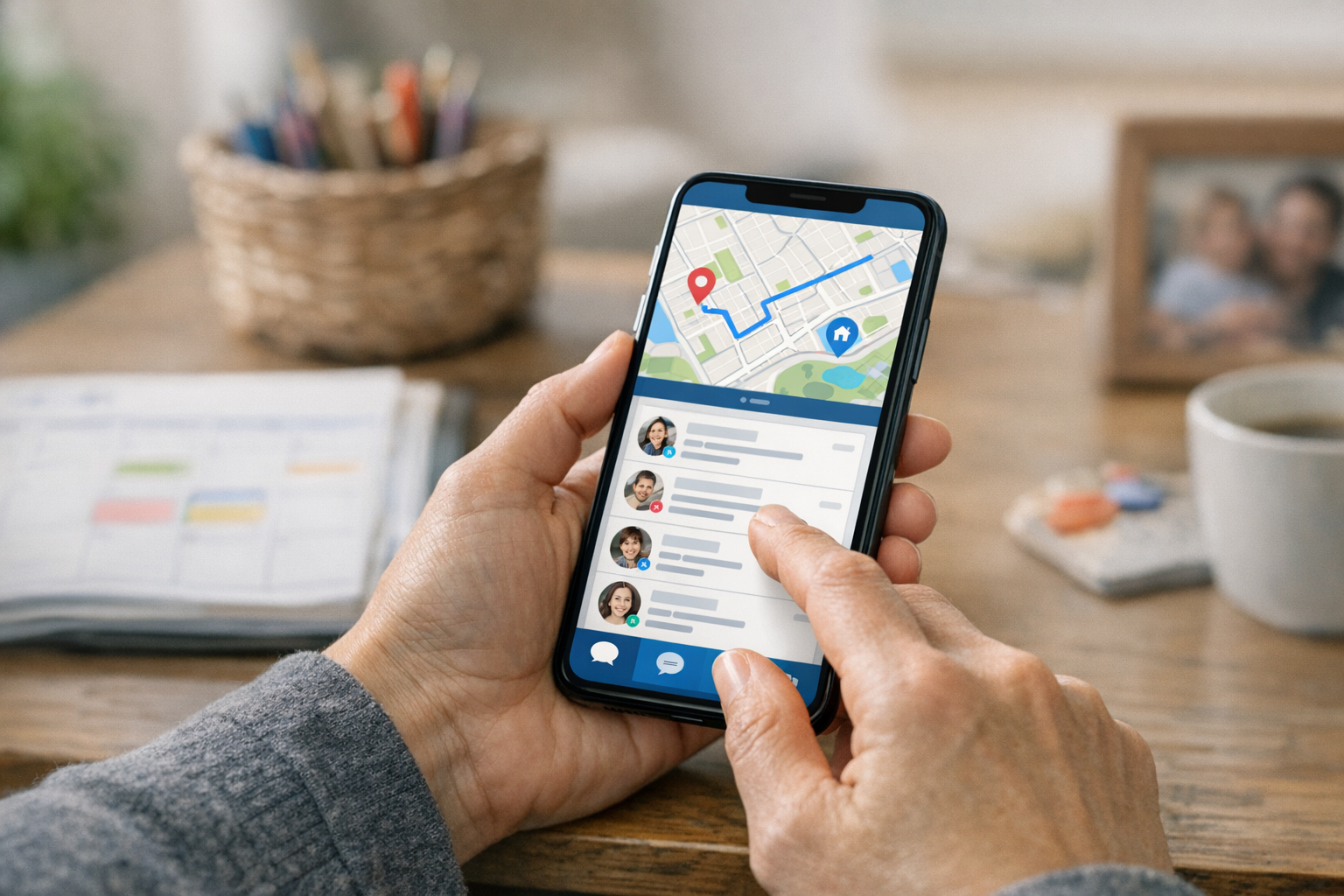
That is the problem behind Find: Family Location Tracker. The purpose is to help users find relevant location information when it matters and reduce uncertainty in everyday routines. A family member running late, a child arriving at a destination, or a need to coordinate pickup times are simple examples, but they reflect a broad reality: a lot of daily stress comes from not knowing where things stand.
When a location tool is designed well, it helps users spend less time sending repeated messages, making unnecessary calls, or guessing about someone’s status. That makes the app useful not because it adds more data, but because it reduces friction in family communication.
Problem 3: Families want clearer visibility into online activity patterns
Digital communication has created a new kind of uncertainty. People may not always need message content, but they often want to understand usage patterns and online timing, especially in family contexts. Questions such as when someone was last active, whether a communication pattern has changed, or whether online routines align with what was expected can matter for coordination and general awareness.
When: WA Family Online Tracker is designed around that need. The point is not to overwhelm users with technical analysis. The point is to provide a clearer view of online status behavior in a format that is easier to interpret.
Used responsibly, this kind of tool can support family communication and planning. It can also help users recognize patterns rather than rely on assumptions. That distinction matters. Many family disagreements start not from confirmed facts, but from confusion, delayed replies, or incomplete information.
What makes Frontguard’s approach different
There are many app developers in the market, and not every mobile company approaches user problems the same way. Frontguard’s identity comes from its emphasis on focused categories where information capture and visibility have immediate practical value.
The company does not frame utility as a side feature. Utility is the core product experience. That means product decisions are shaped by questions like these:
- Will this feature help users understand something faster?
- Will it reduce missed details or repeated effort?
- Will it make everyday coordination easier?
- Does it fit the way people actually use their phones?
Those questions may sound simple, but they create discipline. They help prevent products from becoming bloated, confusing, or detached from real use.
A practical view of trust and responsibility
Any company working in communication capture, family tracking, or online activity awareness has to take responsibility seriously. These are not trivial categories. They involve sensitive use cases and require thoughtful design choices.
Frontguard’s product philosophy is grounded in legitimate user needs: remembering information accurately, coordinating with family members, and improving visibility where visibility serves a practical purpose. The standard should always be responsible use, clear expectations, and an experience that helps people manage real situations more effectively.
That also means avoiding unnecessary complexity or ambiguity about what an app is for. A product should communicate its purpose clearly. Users should understand the job it is meant to do.
Part of a broader app ecosystem
Frontguard is focused on its own product categories, but it also exists within a wider ecosystem of specialized software teams building practical tools for mobile users. For readers interested in adjacent product approaches, it can be useful to explore companies such as NeuralApps, which develops AI-powered mobile solutions, or SphereApps, which works across mobile apps, cloud solutions, and digital products. Looking across that broader landscape makes one thing clear: the strongest products tend to come from teams that stay close to concrete user needs.
Where Frontguard is headed
A strong company introduction should look forward as well as backward. Frontguard’s direction is rooted in the same principle that shaped its existing apps: identify recurring user friction and build mobile products that address it in a direct, understandable way.
That means continuing to refine tools that help users capture details, monitor practical signals, and reduce uncertainty in communication and family coordination. It also means staying disciplined. Not every feature request improves a product. Not every trend deserves a place in the roadmap. The best path is usually the one that keeps the product aligned with its original job.
For Frontguard, that job is clear. Build software that helps people remember better, coordinate more easily, and see important patterns sooner.
The short version
Frontguard is a company focused on practical mobile apps for communication capture and family awareness. Its products include a note-focused taker and call recorder, a family location app built to help users find what matters in real time, and an online activity tracker designed to improve visibility around digital routines.
The company’s mission is not based on building more software for its own sake. It is based on solving common user problems with clear, purpose-built tools. That is what gives Frontguard its identity, and it is the standard the company continues to build around.