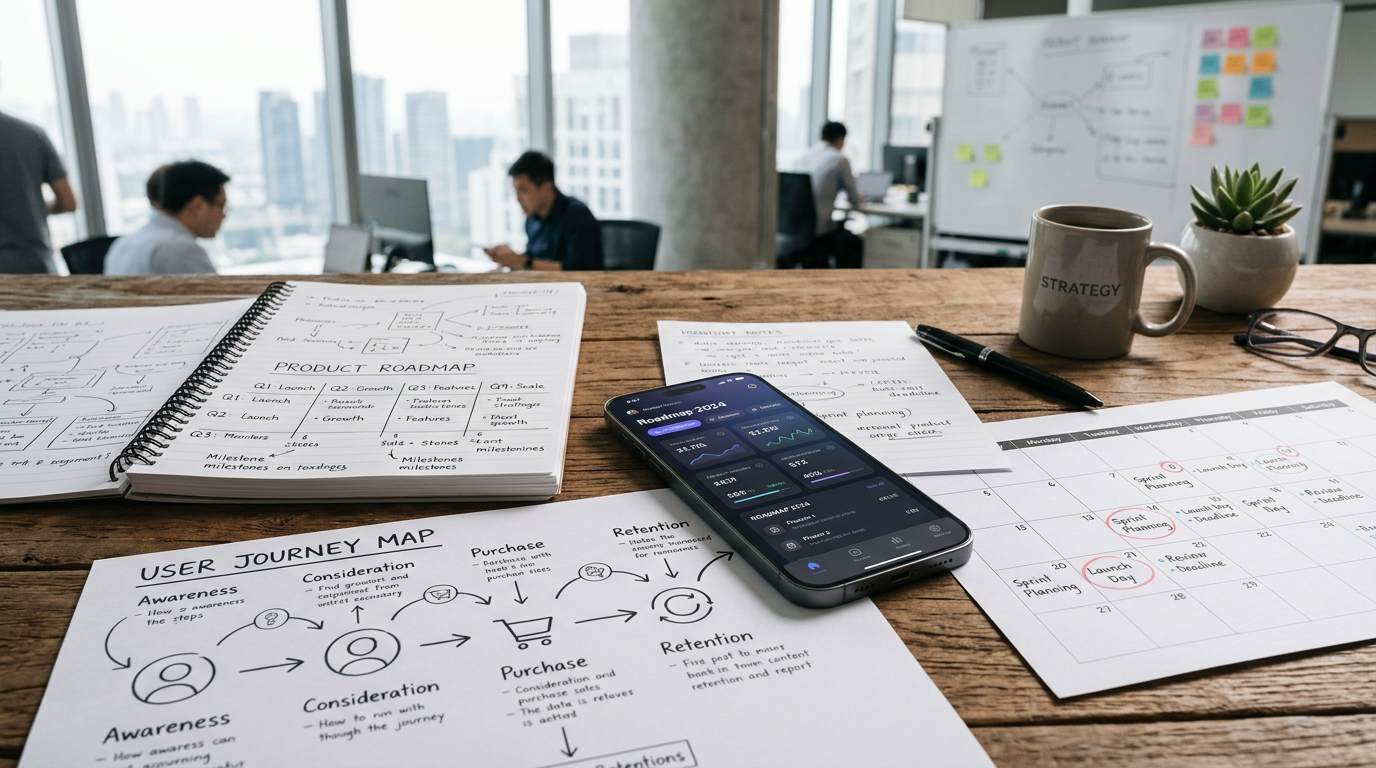
Frontguard’s long-term direction is straightforward: build mobile apps that solve specific, recurring problems people actually face, then improve them based on how those problems change over time. A product roadmap, in this context, is not a list of flashy features; it is a disciplined plan that maps user needs to practical product decisions, release by release.
That distinction matters. Many users do not need another app with broad promises. They need a reliable note workflow after a phone conversation, a dependable way to find family members when plans shift, or clearer visibility into online patterns that affect household coordination. For a company like Frontguard, the job is to decide which of those needs are durable, which are sensitive, and which can be addressed responsibly through focused apps rather than bloated platforms.
The roadmap starts with a simple question: what problem stays important even as devices change?
Phones change every year. People move from an iPhone 11 to an iPhone 14, compare the iPhone 14 Pro with the iPhone 14 Plus, switch carriers, or troubleshoot network issues on TMobile. But the core situations behind app use are often stable. Parents still need family awareness. Professionals still need an accurate record of a call. Households still need lightweight tools that reduce confusion instead of adding more of it.
That is why Frontguard’s roadmap should be understood less as device-first planning and more as behavior-first planning. The device layer matters, of course. A modern mobile company has to account for hardware differences, OS updates, battery constraints, permissions, and regional policies. Still, those are implementation realities. The underlying strategy begins with repeatable human needs.
In practical terms, Frontguard’s current app portfolio already points to three durable categories:
- conversation capture and recall,
- family location awareness,
- household visibility around online activity patterns.
Those categories include products such as AI Note Taker - Call Recorder, Find: Family Location Tracker, and When: WA Family Online Tracker. The important point is not merely that these apps exist. It is that they reflect a philosophy: focused apps are often more useful than a single product trying to do everything.

Why focused apps still make sense
There is a recurring assumption in the mobile market that users want one giant app for every task. Sometimes they do. Often they do not.
A dedicated recorder and note tool serves a different moment than a family coordination app. The person reviewing meeting details after a client call has a different urgency from a parent checking whether someone arrived safely. Combining both into one overloaded experience can weaken each job.
This is where roadmap discipline becomes visible. Instead of asking, “What else can we add?” a strong product team asks, “What should remain separate so the app stays useful?” That leads to better retention, clearer onboarding, and fewer trust problems.
For Frontguard, the long view likely means preserving this focused-app model while improving the connective tissue around it: cleaner setup, stronger privacy controls, better summaries, smarter alerts, clearer permissions, and less friction when users move between devices or reinstall apps.
How product decisions map to user needs
Roadmaps are most useful when they show the logic behind tradeoffs. Here is the practical framework behind sound product planning for a company in Frontguard’s position.
1. High-frequency need beats novelty
If a feature solves a problem that appears every week, it usually deserves higher priority than a feature that looks impressive in a launch note but rarely gets used. A call recorder app, for example, becomes more valuable when captured information is easier to review and organize. That may matter more than adding decorative interface changes.
For users, this means a roadmap should increasingly favor:
- faster access to important records,
- clearer summaries after conversations,
- less manual sorting of saved content,
- stronger reliability across routine use cases.
2. Sensitive use cases require restraint
Family awareness and communication records sit close to questions of privacy, consent, and trust. Responsible product decisions in these categories are not just about adding more visibility. They are about adding the right visibility, with clear expectations for the user.
That is an important part of the Frontguard vision. Long-term credibility in this category will come from design choices that reduce ambiguity: transparent permissions, understandable alerts, clear data controls, and interfaces that explain what is being tracked or stored.
A useful mobile app should feel legible. Users should not need to guess what is happening in the background.
3. Cross-device reality matters more than ideal conditions
One household may use older devices like the iPhone 11, while another uses newer hardware such as the iPhone 14 Pro. Some users operate on stable home Wi-Fi, while others depend on carrier conditions from providers such as TMobile. A roadmap built only for perfect conditions usually fails in real life.
So the practical direction is not simply “build more.” It is “build for messy, everyday conditions.” That includes performance tuning, battery efficiency, graceful permission handling, and predictable behavior when networks are inconsistent.
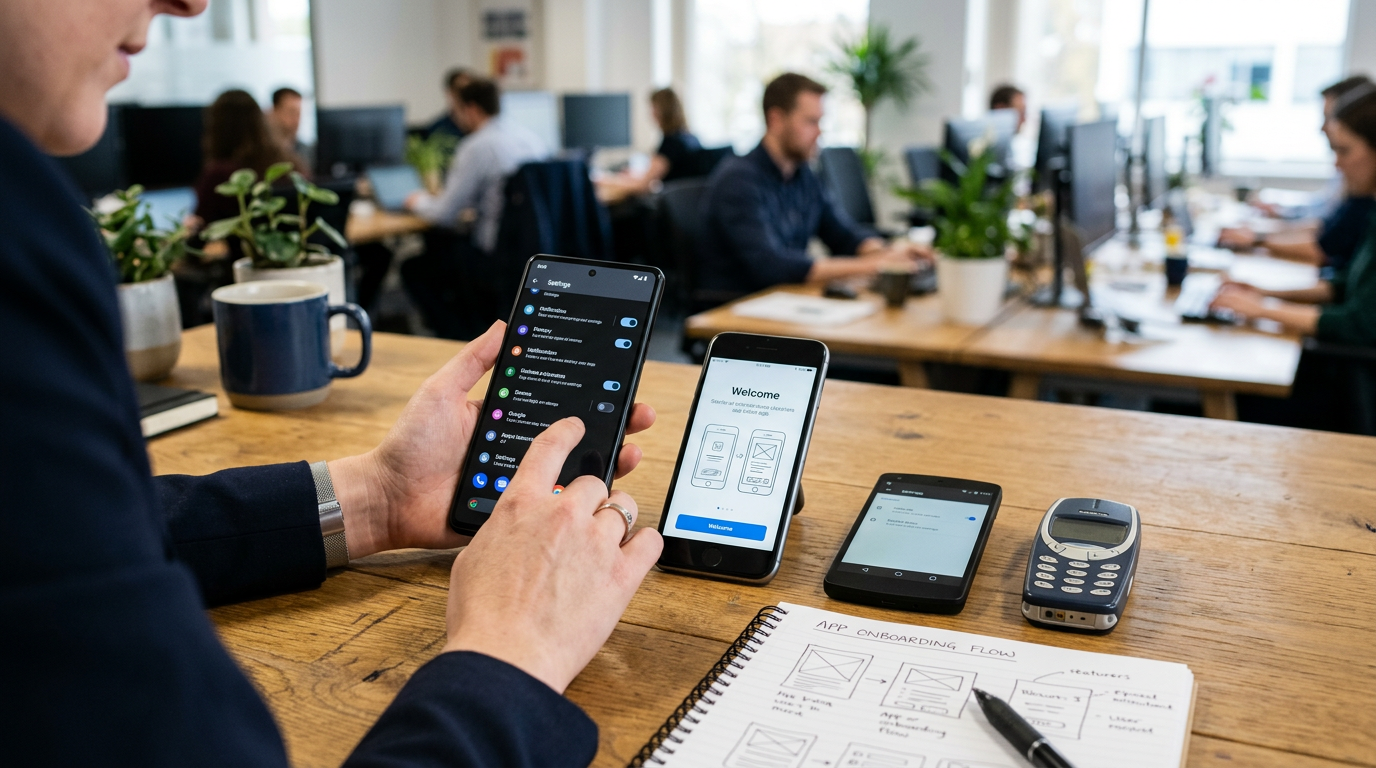
Three product lanes that define the next stage
Although specific release timing can shift, the broader product direction for Frontguard can be understood through three development lanes.
Communication memory
People forget details from calls, especially when discussions involve logistics, commitments, pricing, follow-ups, or personal context. The need here is not just recording. It is retrieval. Users want to revisit the important part without replaying everything.
That is why the future of this category likely centers on better post-call utility: stronger note structure, faster search, cleaner organization, and easier conversion of conversation into action. AI Note Taker - Call Recorder fits naturally into this lane as a practical example of where communication tools are heading: less raw storage, more usable recall.
Family coordination
Location tools work best when they reduce anxiety without becoming intrusive. The strongest roadmap decisions in this space usually focus on clarity: where someone is, whether movement is expected, and which alerts are actually worth sending.
Find: Family Location Tracker represents this category well because the user need is not abstract “tracking.” It is coordination. Families want fewer missed pickups, fewer “where are you?” messages, and better awareness when routines change.
Pattern visibility
Some household questions are not about exact content but about timing and activity patterns. When was someone last active? Are routines changing? Is there a reason to check in? That is different from communication memory and different again from location awareness.
When: WA Family Online Tracker sits in this lane. The broader roadmap lesson is that pattern-based products need careful boundaries and plain-language controls. Their usefulness depends on context, not constant surveillance.
What users should expect from a mature mobile roadmap
A mature roadmap is rarely the loudest one. It tends to show up in a series of improvements that make the product easier to trust and easier to keep using.
For Frontguard, that likely means the next several stages of product development should continue to include:
- Stability before expansion. Fix recurring pain points before launching adjacent features.
- Better setup flows. Reduce drop-off during permissions, onboarding, and device changes.
- Smarter defaults. Help users get value quickly without requiring heavy customization.
- More control. Make notifications, records, and visibility settings easier to understand and adjust.
- Clearer boundaries between apps. Keep each product’s purpose sharp instead of blending everything together.
That final point is especially important for any app company with multiple products. Users should be able to tell, within seconds, what each app does, who it is for, and when it is the right choice.
A practical comparison: platform thinking versus problem thinking
| Approach | What it looks like | Likely outcome |
|---|---|---|
| Platform thinking | One large app tries to include every possible tool | Broader scope, but often more complexity and weaker clarity |
| Problem thinking | Separate apps solve distinct, recurring user needs | Clearer value, simpler onboarding, and better fit for specific use cases |
Frontguard’s product direction appears much closer to problem thinking. For many users, that is the more practical choice.
If you want a broader look at the company’s app categories and operating philosophy, Frontguard has already outlined that in its overview of practical apps for communication and family awareness.
Questions users often ask when they hear “roadmap”
Does a roadmap mean constant feature expansion?
No. A good roadmap often removes friction, improves reliability, and clarifies the product before adding new surface area.
Why not merge all apps into one?
Because different jobs require different experiences. A note taker for calls and a family coordination tool solve separate problems, even if both live on mobile devices.
Will device changes reshape the plan?
Yes, but mostly at the implementation level. Moving from an iPhone 11 to an iPhone 14 or iPhone 14 Plus may affect performance expectations and setup behavior more than the underlying user need.
How should users evaluate whether a new feature is actually useful?
Ask whether it saves time, reduces confusion, improves control, or increases trust. If it does none of those, it may not deserve much attention.

The longer-term vision
The strongest long-term vision for Frontguard is not to become every kind of software company. It is to become exceptionally good at a narrow but important set of mobile utilities where trust, clarity, and repeat use matter more than hype.
That kind of company earns its place by making everyday moments easier to manage: remembering what was said on a call, knowing whether a family member is on the way, checking patterns that help households stay coordinated. These are not fringe use cases. They are ordinary problems that return again and again.
From that perspective, the roadmap is less about prediction and more about discipline. Which features make the app more dependable? Which ones reduce ambiguity? Which ones respect the fact that users need help, not extra noise?
That is the test that matters. If Frontguard continues to align product decisions with recurring user needs, keeps each app’s purpose clear, and treats sensitive use cases with restraint, its direction will make sense to users even before they see the next release note.
For teams evaluating mobile products, and for users deciding which apps belong on their phones, that is often the clearest signal of a healthy company: the roadmap feels coherent because it reflects real life.